I Wonder: Why does Manhattan have so few sidewalks?
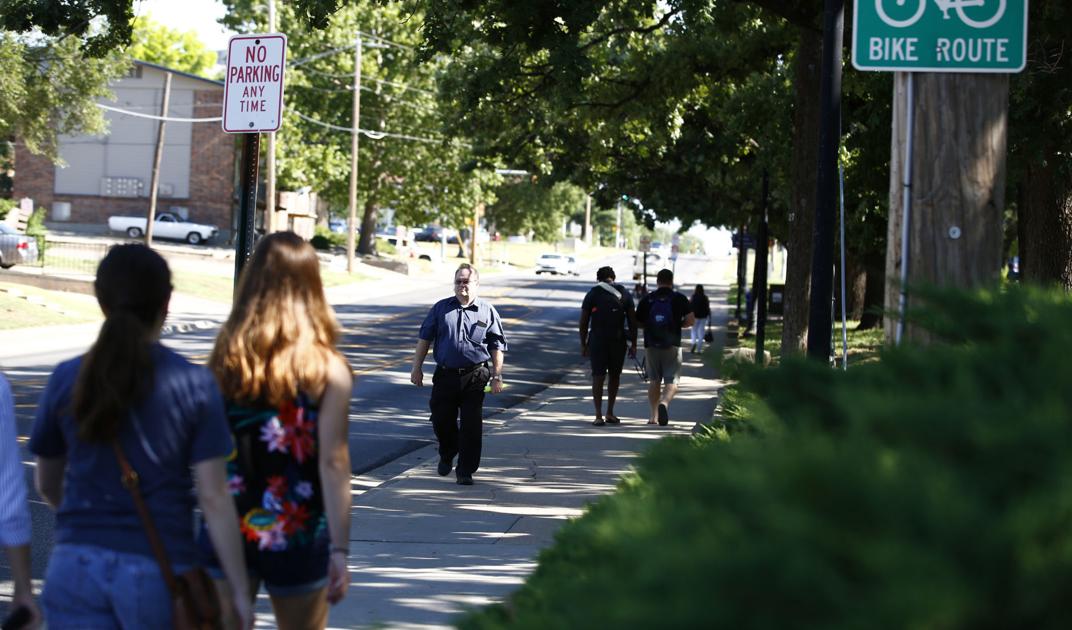
Q: I wonder why so few streets have sidewalks on both sides of the street? Other than the historic downtown, most streets in Manhattan have either no sidewalk or a sidewalk on only one side of the street. Why is that?
A: It’s funny you should ask that. The topic recently came up at a Manhattan City Commission meeting.
On June 19, Chad Bunger, community development assistant director, discussed sidewalks during a general discussion about updating zoning and subdivision regulations.
“If you drive around Manhattan and look closely, Manhattan kind of looks like the rings of a tree,” he said. “You can date subdivisions by some of its development patterns, and sidewalks are one of them.”
During its initial development, Manhattan required sidewalks on both sides of the streets, which would explain the look of downtown and other older areas in town.
Bunger said the city didn’t require any sidewalks from the 1950s through the late 1970s. The city has and may continue to add sidewalks to some of these areas even after they’ve been developed.
“As you drive to the outer edges of the city, you’ll see no sidewalks within residential neighborhoods except for on major streets,” he said.
“Most of those were installed by the city when those roadways were improved like Kimball Avenue and Browning.”
After that time period, Bunger said the city started requiring sidewalks on one side of residential streets while collector and arterial streets (generally avenues, boulevards and parkways) require sidewalks on both sides.
Soon, new developments in Manhattan will resemble the older parts of Manhattan.
The city is working on the Unified Development Ordinance (UDO), which will update and consolidate the zoning and subdivision regulations.
The proposed updates will require future developments to have sidewalks on both sides of all streets except expressways such as K-113.
Bunger said this requirement provides health benefits and even economic benefits based on discussions with developers.
Bunger said he examined houses in the Lee Mill Heights area with nearly identical lot sizes.
He said the Riley County Appraiser’s Office placed a higher value on every lot with a sidewalk in front of the house compared to a house across the street without a sidewalk.
“Yes, adding sidewalks costs money to a development...but there’s also the economic benefit of having them,” he said.
To submit a question, send by email to questions@themercury.com, or by regular mail to Questions, P.O. Box 787 Manhattan, KS 66505.
Source: http://themercury.com/news/city/i-wonder-why-does-manhattan-have-so-few-sidewalks/article_f4264590-5b18-5042-9179-7cd41b535a4b.html


Comments
Post a Comment